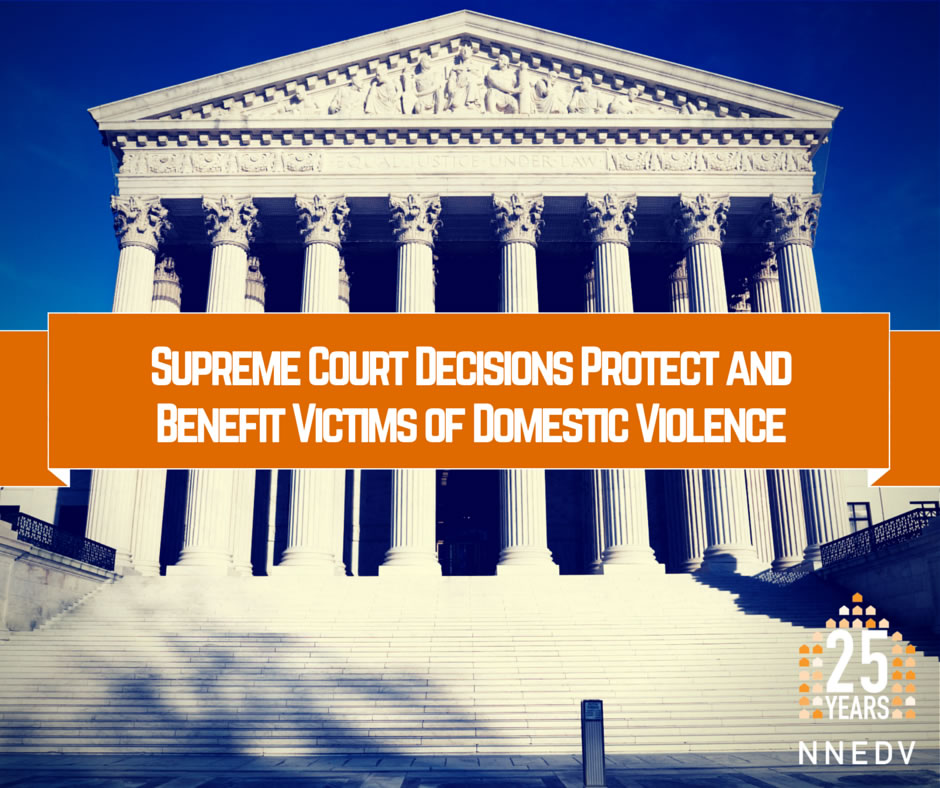
Supreme Court Decisions Protect and Benefit Victims of Domestic Violence
June 25, 2015
The National Network to End Domestic Violence (NNEDV) applauds two U.S. Supreme Court decisions that will have an impact on the safety and security of domestic violence survivors.
In King v. Burwell, the Court upholds the government’s right to subsidize premiums for health insurance purchased through a federally-run marketplace. This ruling represents the continuance of our society’s commitment to affordable health care and access, which is critical for domestic violence victims and millions of others who will benefit from this decision.
“Before the Affordable Care Act, countless victims of domestic violence were trapped in abusive relationships because of a pre-existing condition that required ongoing medical treatment. This decision ensures that they and their children will continue to receive assistance in purchasing separate insurance coverage,” said Kim Gandy, NNEDV President & CEO.
NNEDV is pleased that the U.S. Supreme Court, in Texas Department of Housing and Community Affairs v. The Inclusive Communities Project, affirmed that housing policies and practices with a disparate impact on minority communities violate the Fair Housing Act, even if they were not designed for the purpose of discriminating.
This kind of disparate impact analysis is also a crucial tool for addressing housing discrimination against victims of domestic and sexual violence, where the policies may appear neutral but have a disparate impact on victims.
“Domestic violence is a crime that happens at home – a place that is meant to be safe and secure. The Fair Housing Act, specifically the kind of disparate impact analysis upheld by the Court today, has helped countless women fight discriminatory practices that either evict them or bar them from accessing housing. This decision will help keep survivors safe and housed,” said Gandy.