

#LetsTalk: Overcoming the Stigma of Depression and Domestic Violence for World Health Day
April 7, 2017
The National Network to End Domestic Violence (NNEDV) recognizes April 7 as World Health Day.
This year, the World Health Organization is raising awareness about depression, a disorder that affects more than 300 million people worldwide. Survivors of domestic violence are nearly twice as likely to suffer depressive symptoms compared to women who have not experienced domestic abuse. These symptoms can include: a loss of energy, a change in appetite, a change in sleeping habits, anxiety, difficulty concentrating, indecisiveness, restlessness, feelings of guilt or hopelessness, and thoughts of self-harm or suicide.
The effects of depression can be debilitating and significantly impact a survivor’s ability to carry out everyday tasks, such as going to work or maintaining relationships with family and friends. Experiencing multiple types of abuse can increase the risk of developing mental health symptoms.
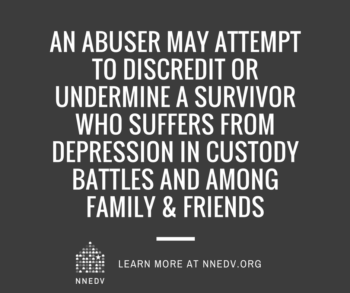
Additionally, survivors have voiced many concerns about prejudice and bias regarding mental health, as their mental health status is often used against them by abusers and when they seek services. Abusers may also attempt to discredit or undermine a survivor who suffers from depression in custody battles (or other court-related services) and among family and friends.
NNEDV’s 10th Annual Domestic Violence Counts Census Report found that in just one day, 37% of services provided to survivors by local domestic violence programs were related to mental health support and advocacy. However, in the past year, 59 programs have been forced to eliminate or reduce therapy and counseling services for adults, while 53 programs for children were also reduced or eliminated. The lack of adequate resources directly translates to fewer survivors receiving needed mental health services.
A better understanding of depression and how it directly impacts survivors of domestic violence can shift the stigma associated with mental health and trauma. Ultimately, it may lead more survivors with depression to seek the services they need.
NNEDV continues to advocate for survivor empowerment by raising awareness about the unique barriers many survivors face and the importance of securing funding for domestic violence programs that provide critical services, such as mental health advocacy and counseling, to help survivors of domestic violence and their families.
Learn more about World Health Day, depression, and trauma:
- National Center on Domestic Violence, Trauma, and Mental Health (NCDVTMH)
- Visit the World Health Organization – World Health Day 2017 website and learn how you can raise awareness about depression.
- Follow the conversation on social media using #LetsTalk and begin your own conversations using our 10 Tips to Have an Informed Conversation about Domestic Violence