
Spread the Word about the Link Between HIV and DV!
October 28, 2014
In recognition of Domestic Violence Awareness Month, the National Network to End Domestic Violence (NNEDV) is using the week of October 27-31 to highlight the link between domestic violence and HIV/AIDS.
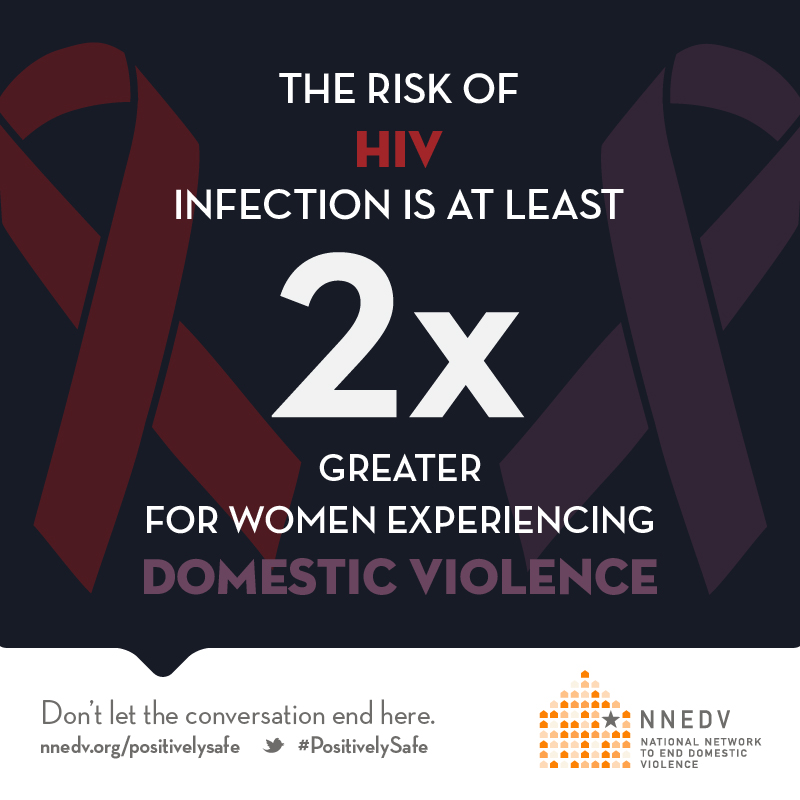
We know that one in four women experiences domestic violence in her lifetime, but we often don’t recognize that the risk of HIV infection becomes two times greater when women experience violence. Don’t let the conversation end here – see what you can do to spread the word about the intersection of HIV/AIDS and domestic violence by visiting NNEDV.org/PositivelySafe.
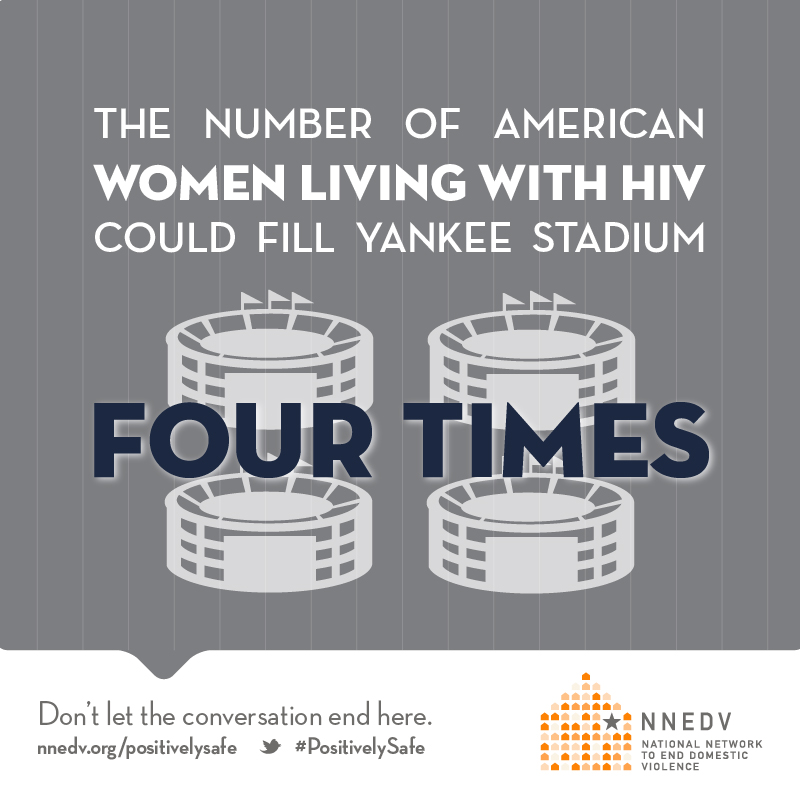
Have you been watching the World Series? It’s shocking that the number of people who have attended every 2014 World Series game so far is about the same as the number of women living with HIV in the United States. Don’t let the conversation end here – learn more about how HIV/AIDS and domestic violence affect the lives of women in our country by visiting NNEDV.org/PositivelySafe.
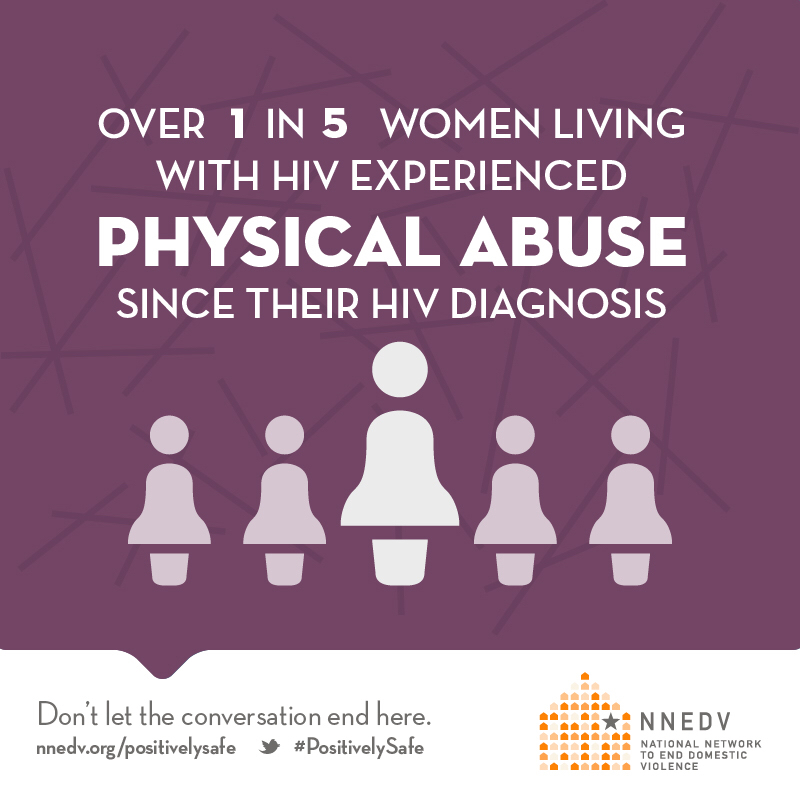
When we think about the challenges of women living with HIV, we rarely consider how often women experience abuse, particularly physical abuse, after being diagnosed. Don’t let the conversation end here – learn more about how you can support women living with HIV/AIDS who experience domestic violence by visiting NNEDV.org/PositivelySafe.
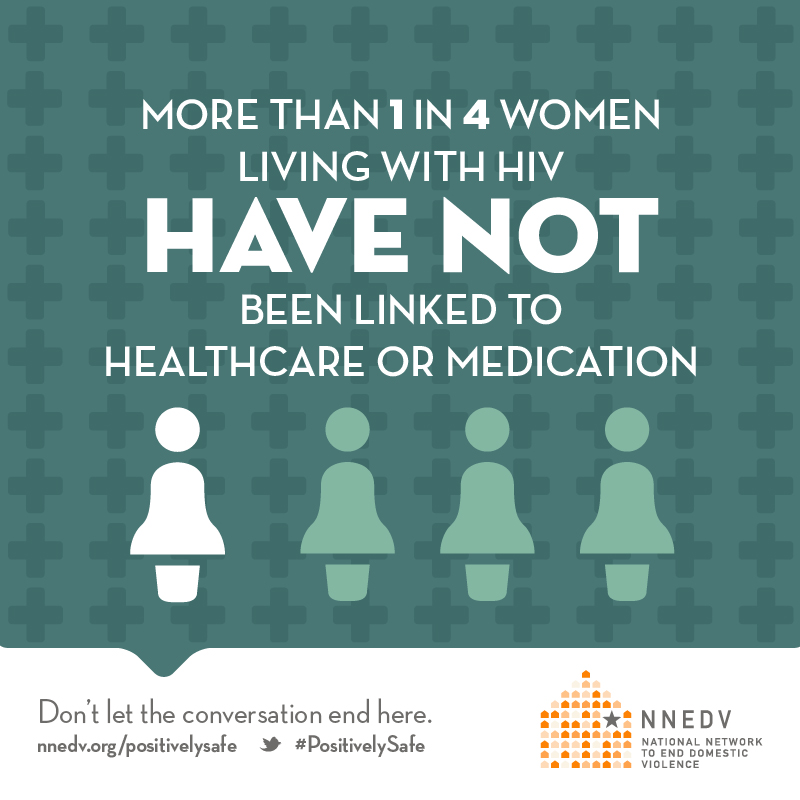
We know that people can live healthy lives with HIV now with a consistent regimen of medication and support from health care providers. However, women living with HIV who have experienced abuse, especially if it’s recent, are less likely to be able to maintain medical care needed to keep them healthy and alive. Don’t let the conversation end here – learn more about how you can build partnerships to link women living with HIV/AIDS to care when they experience domestic violence by visiting NNEDV.org/PositivelySafe.