

DVAM 2017: Beyond the Buzzwords
October 1, 2017
Every October, the National Network to End Domestic Violence (NNEDV) joins with our partners, supporters, and allies across the country to recognize Domestic Violence Awareness Month (DVAM).
DVAM is an opportunity for everyone to take a stand against domestic violence. We invited you to join us and get involved this month through our 2017 #31n31 campaign: Beyond the Buzzwords. We are digging into what common buzzwords in the domestic violence prevention field mean to us. Share the full campaign below:
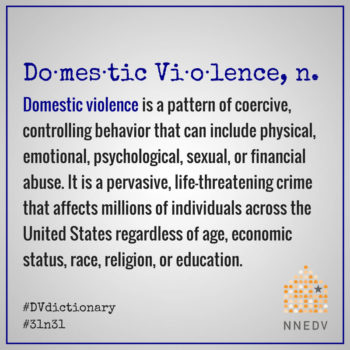
October 1 – Domestic Violence
In just one day in 2016, nearly 73,000 adults and children received vital, life-changing domestic violence services. Yet on the same day, almost 12,000 requests for services were unmet due to a lack of resources at local programs and shelters.
October 2 – Survivor
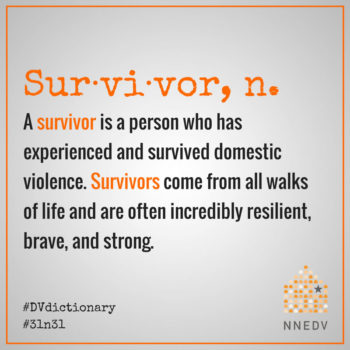
One in four women in the United States will experience domestic violence at some point in her lifetime. Some call themselves “survivors,” others call themselves “victims,” and still others may prefer different terminology or none at all.
October 3 – Advocate
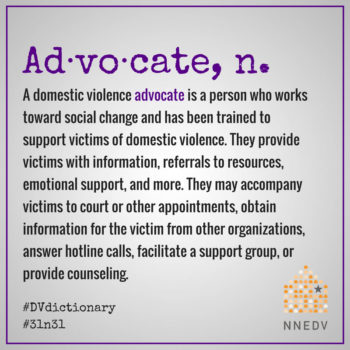
Advocates change and save lives, every single day.
October 4 – Coalition
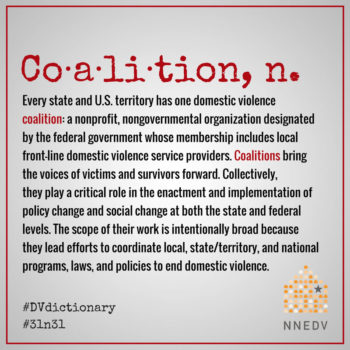
State and territorial coalitions are critical to ending domestic violence. NNEDV represents all 56 coalitions, and you can find yours here.
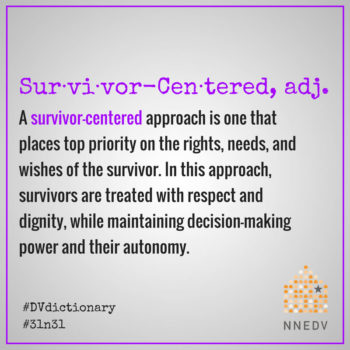
October 5 – Survivor-Centered
Survivors are the experts on their own lives. Trust survivors. Believe survivors. Respect survivors.
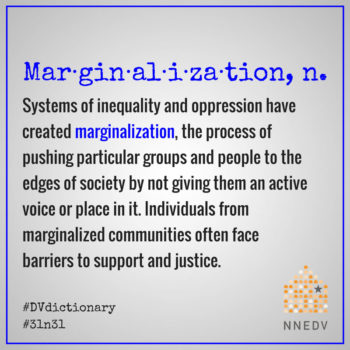
October 6 – Marginalization
Survivors face marginalization in many ways. The first step to combat it: listen and believe survivors.
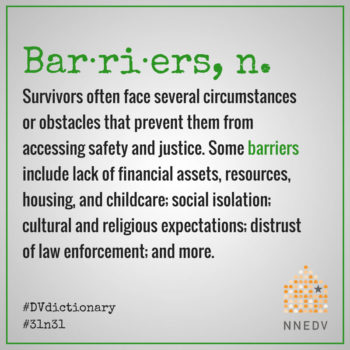
October 7 – Barriers
Survivors need a variety of resources and supports to address the barriers they face and to negotiate safety.
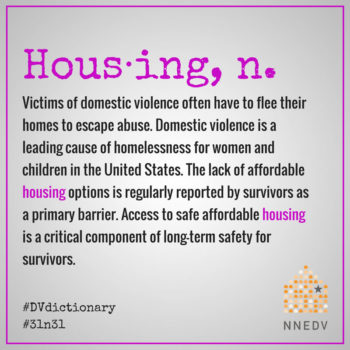
October 8 – Housing
Housing programs provide critical services for survivors of domestic violence and are often a key component that allows survivors to flee the violence perpetrated against them. Throughout the country, housing programs vary to include short and long-term housing, rental assistance services, and support services that work to meet the individual needs of survivors.
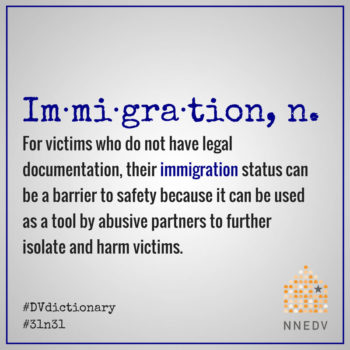
October 9 – Immigration
Escaping domestic violence is already difficult for immigrant survivors. Additional barriers make it even more frightening for victims to come forward and seek help.
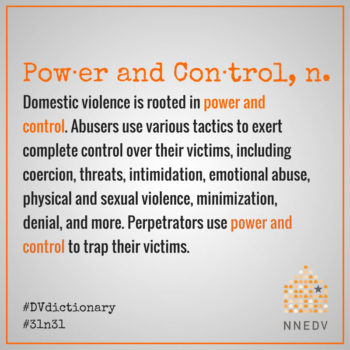
October 10 – Power and Control
Domestic violence is rooted in power and control.
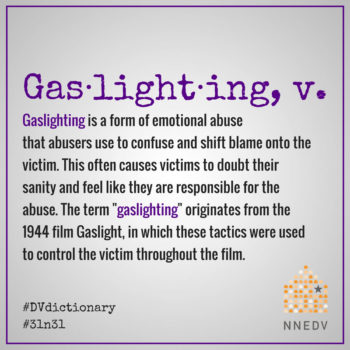
October 11 – Gaslighting
Gaslighting causes victims to feel like they are responsible for the abuse.
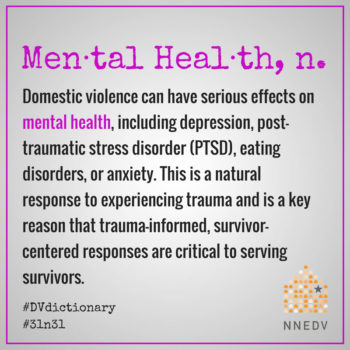
October 12 – Mental Health
Understanding how domestic violence affects the mental health of survivors can shift the stigma associated with mental health and trauma.
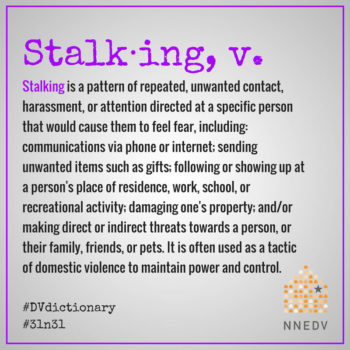
October 13 – Stalking
One in six women and one in nineteen men in the United States have experienced stalking at some point in their lifetime.
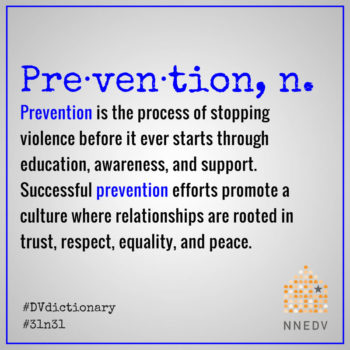
October 14 – Prevention
Prevention promotes a culture where relationships are rooted in respect & peace.
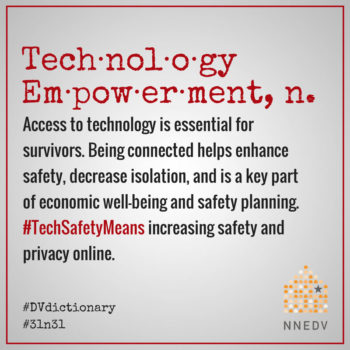
October 15 – Technology Empowerment
Survivors deserve safe access to technology and online spaces. Learn more from NNEDV’s Safety Net Project.
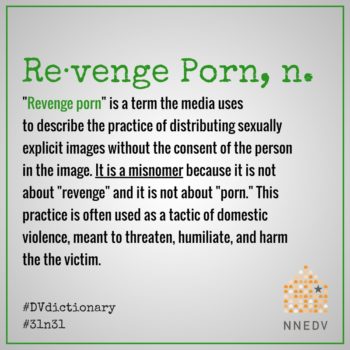
October 16 – Revenge Porn
Sharing sexually explicit images without the consent of the person in the image is a tactic of abuse. It’s about control — not revenge.
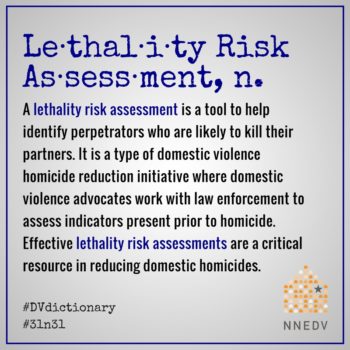
October 17 – Lethality Risk Assessment
A lethality assessment helps identify risk and take actions to improve safety.
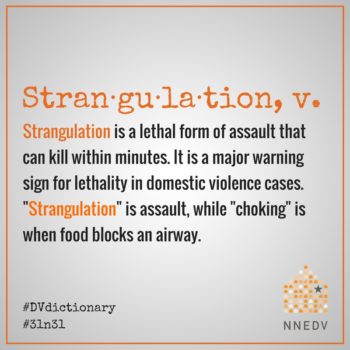
October 18 – Strangulation
Strangulation is a major risk factor for domestic violence homicide.
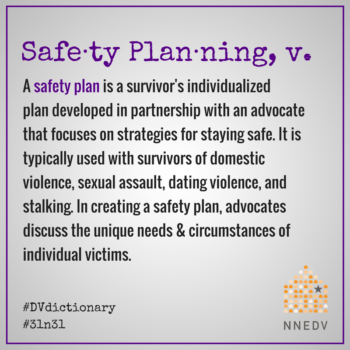
October 19 – Safety Planning
Safety plans should always be developed by and with a survivor.
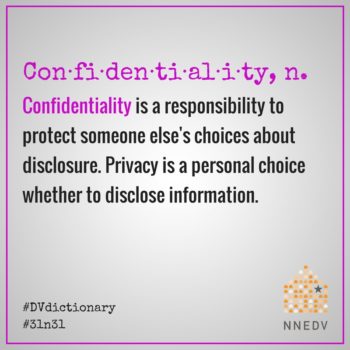
October 20 – Confidentiality
Confidentiality has long been a core element of effective domestic and sexual violence advocacy.
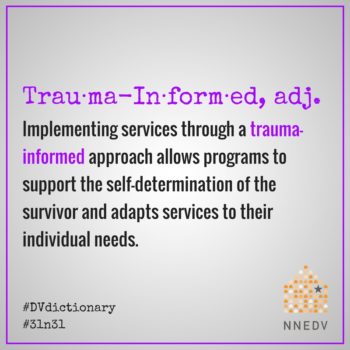
October 21 – Trauma-Informed
A trauma-informed approach recognizes the mental and psychological effects of abuse.
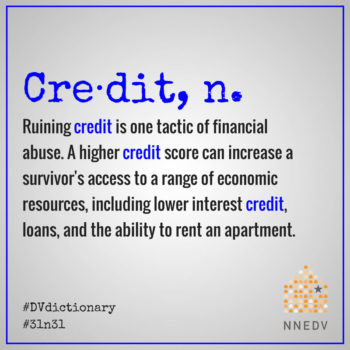
October 22 – Credit
Financial abuse is a tactic in an estimated 99% of domestic violence cases.
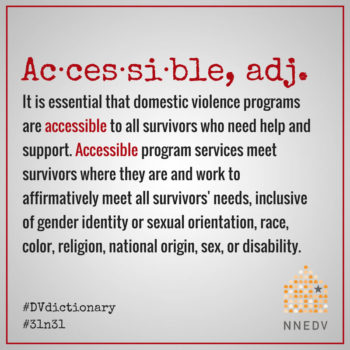
October 23 – Accessible
Survivors must have access to services that affirmatively meet all of their needs.
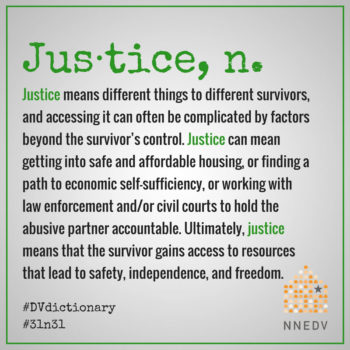
October 24 – Justice
Justice is complex, but it must lead to safety, independence, and freedom.
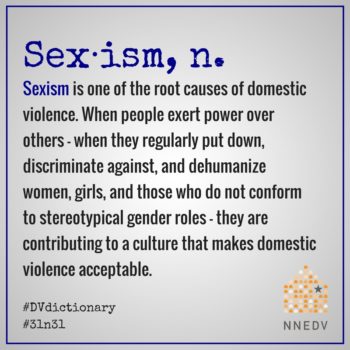
October 25 – Sexism
Ending domestic violence includes dismantling sexism.
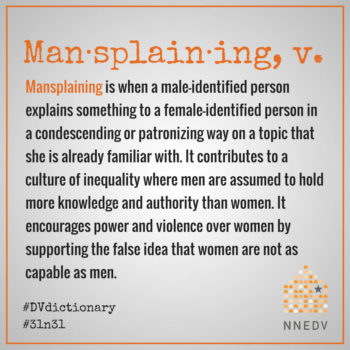
October 26 – Mansplaining
Condescending responses to women’s experiences and knowledge perpetuate sexism.
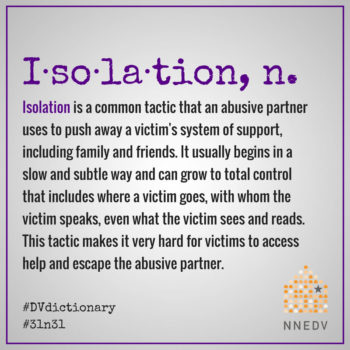
October 27 – Isolation
Victims often need access to systems of support to counteract an abuser’s control and isolation.
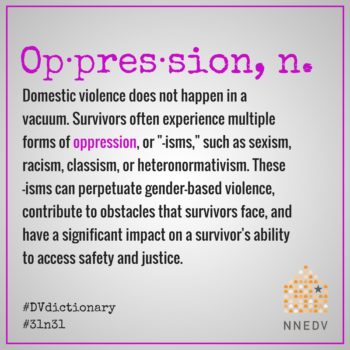
October 28 – Oppression
Survivors often face multiple forms of oppression. Each impacts safety and freedom.
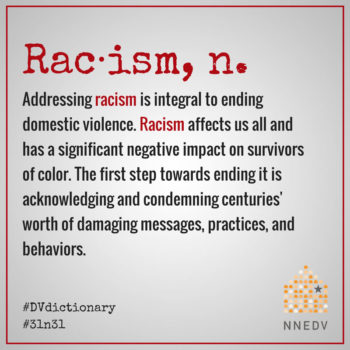
October 29 – Racism
We must name and reject racist messages and behaviors.
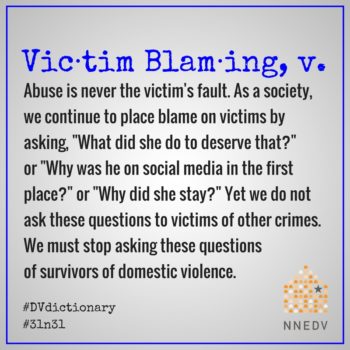
October 30 – Victim Blaming
Support for survivors means understanding abuse is never the victim’s fault.
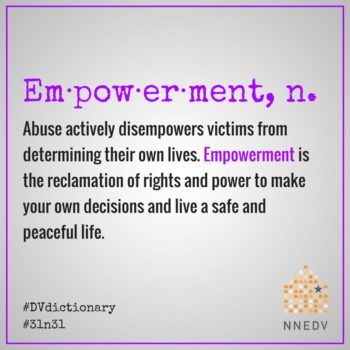
October 31 – Empowerment
Everyone should be empowered to make their own decisions & live a life free from violence.
Follow us on Facebook, Instagram, and Twitter, and use our hashtags #31n31 and #DVDictionary to join the conversation.