

Emotional Abuse is Anything but “Tender”: Myths and Reality
November 3, 2016
Emotional abuse is a pattern of behavior used to achieve and maintain power and control over another person by damaging the victim’s self-esteem. Tactics can include things like: constant criticism; threats; minimizing or blaming the victim for the abuse; isolation from family, friends, or other systems of support; and/or “gaslighting,” or making the victim feel crazy.
Emotional abuse often makes the victim feel responsible for the abuse, yet powerless to change it. It can be extremely difficult to recognize, let alone report or prove, and while it may not lead to physical violence, almost all intimate partner violence is preceded and accompanied by emotional abuse.
It is important that victims have agency to define their own experiences, and it is equally important to recognize how easily the narrative about emotional abuse can become twisted and glossed over.
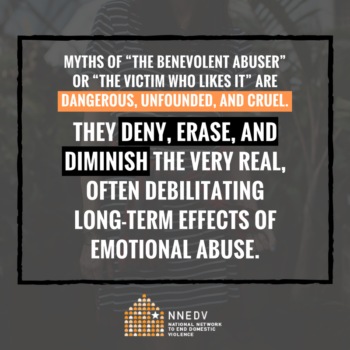
Unfortunately, many myths about emotional abuse persist. Myths of “the benevolent abuser” or “the victim who likes it” are dangerous, unfounded, and cruel. They deny, erase, and diminish the very real, often debilitating long-term effects of emotional abuse that victims experience every single day and the choices they are forced to make in order to survive.
By calling into question the severity – or even the reality – of abuse, these myths disrupt our ability to hold abusers accountable for their intentional actions; they effectively reinforce the messages the abuser is sending the victim and others.
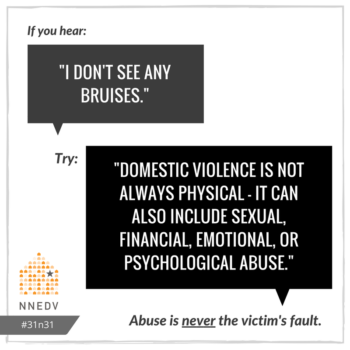
Another myth about emotional abuse is that aspects of controlling another person can be sexy. Some people erroneously believe that emotional abuse is just another form of BDSM (Bondage and Discipline/Domination and Submission/Sadism and Masochism) and perpetuate this confusion.
This misconception minimizes the implications of abuse and twists our understanding of BDSM culture; it normalizes controlling, abusive behavior by associating it with a preference that is actually founded in respect. One of the stark differences between abuse and BDSM is the foundation of consent: BDSM includes respect for limits, an understanding of trust, and enjoyment for all partners involved. Abuse does not.
Some people mischaracterize emotional abuse as jealousy. Unfortunately, many of us are socialized to believe that jealousy is normal, expected, and encouraged. Constantly calling or checking in is regarded as thoughtful; spending excessive amounts of time with one another is just quality time; feeling romantically threatened or jealous shows how committed a person is to the relationship; and so on.
These misconceptions can obscure the fact that such actions are based on a lack of trust and a desire for control of the other person. Abusers are very often “charming” – at first – and their early actions are misconstrued as thoughtful, romantic gestures. We must change the narrative about emotional abuse in a way that allows victims to express their experiences and seek support, and does not minimize or justify abuse.
Emotional abuse is not sexy. It is not tender. Emotional abuse may not leave physical scars, but the toll it takes on a victim can be just as detrimental and long-lasting. The confusion that emotional abuse creates is very real and just one of many complicated reasons why many victims do not “just leave.” Many survivors have false hope that, since they are made to feel responsible for the abuse, they can somehow stop it.
Each October, the National Network to End Domestic Violence (NNEDV) honors Domestic Violence Awareness Month (DVAM). This October, NNEDV addressed and dismantled misconceptions about domestic violence through our annual #31n31 campaign, challenging one perception for each of the 31 days of October. These conversations must continue in order to create a world without violence for generations to come.